
The Ionian Islands remain some of the most captivating destinations in the Mediterranean, offering a blend of Venetian history, dramatic geology, and waters that seem to glow with an inner light. However, as 2026 unfolds, the reality of travel in this region requires a balance between seeking “free” natural beauty and navigating the logistical hurdles of a popular island destination.
The Reality of the North: Corfu’s Charm and Challenges
Corfu (Kerkyra) is an island of immense biodiversity and history, but it is currently facing a “success crisis.” The island’s infrastructure is struggling under the weight of its own popularity.
- The Road Paradox: While the island offers some of the most scenic drives in Greece, the roads in Corfu remain notoriously difficult. Narrow, winding, and often poorly maintained, they require focused driving, especially as tourist numbers surge during the summer months.
- Eco-Tourism Potential: Sustainable projects—from permaculture farms to bioclimatic boutique stays—are emerging. However, these are complicated by bureaucratic hurdles and the high energy demand of the peak summer season. Moving toward an 80% reduction in terrestrial impact through better waste management and renewable energy is a goal many locals are pushing for, though progress is gradual.
Must-Visit Landmarks
1. From Cliffs to Coves – Cape Drastis & Porto Timoni
To truly experience the island beyond the crowds, one must head to the coastlines.
The northern tip of the island features Cape Drastis, where white limestone cliffs contrast sharply with the deep blue seaFurther south, Porto Timoni offers a unique double-bay experience. Accessible via a rocky path from the village of Afionas, it remains a benchmark for natural preservation, provided visitors follow “leave no trace” principles to protect the local biodiversity.
2. The Paxos & Antipaxos Escapade
If Corfu is the grand capital, Paxos and Antipaxos are the hidden jewels of the Ionian Sea. A ferry crossing from the Port of Corfu leads you to a slower pace of life.
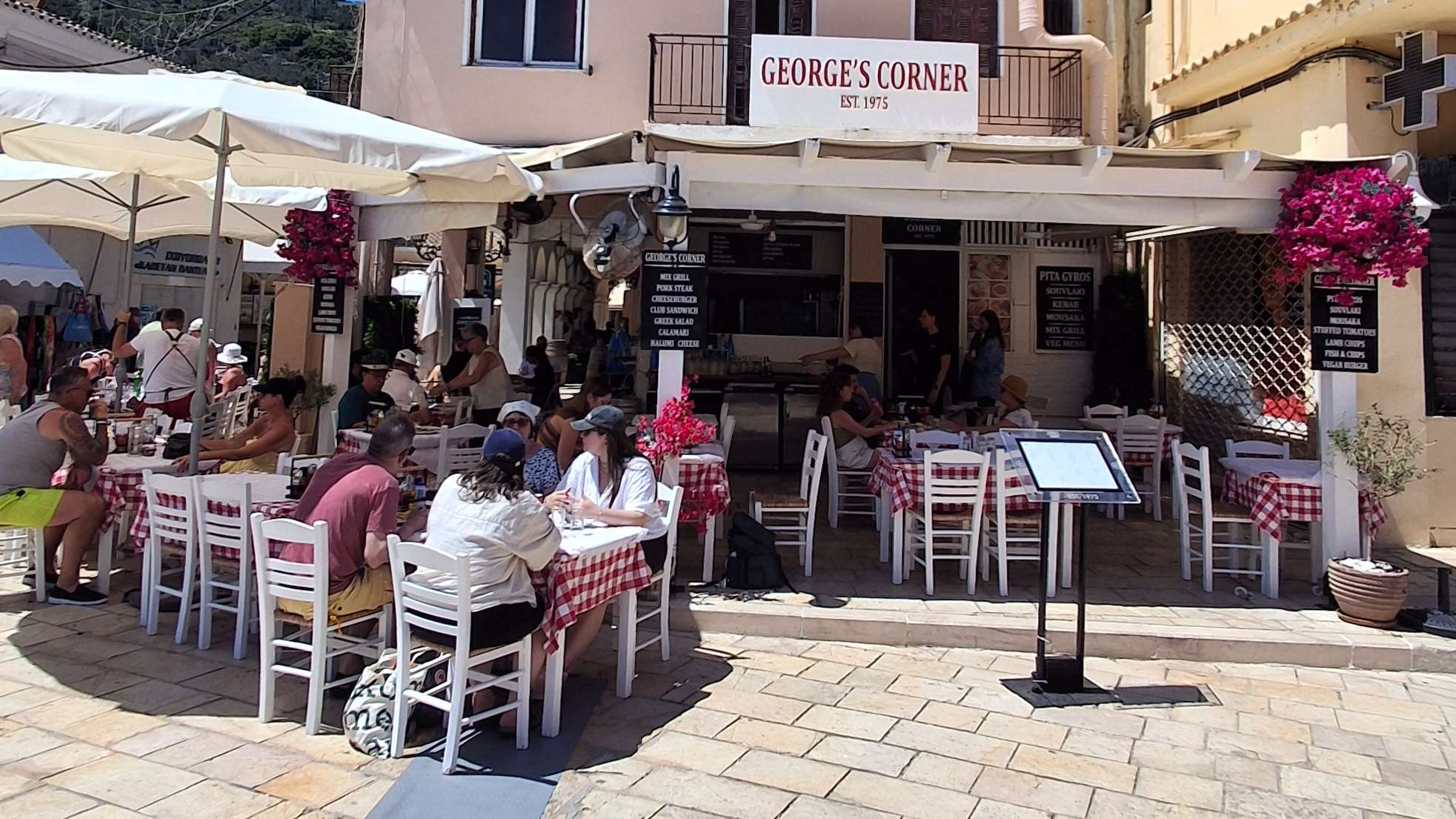
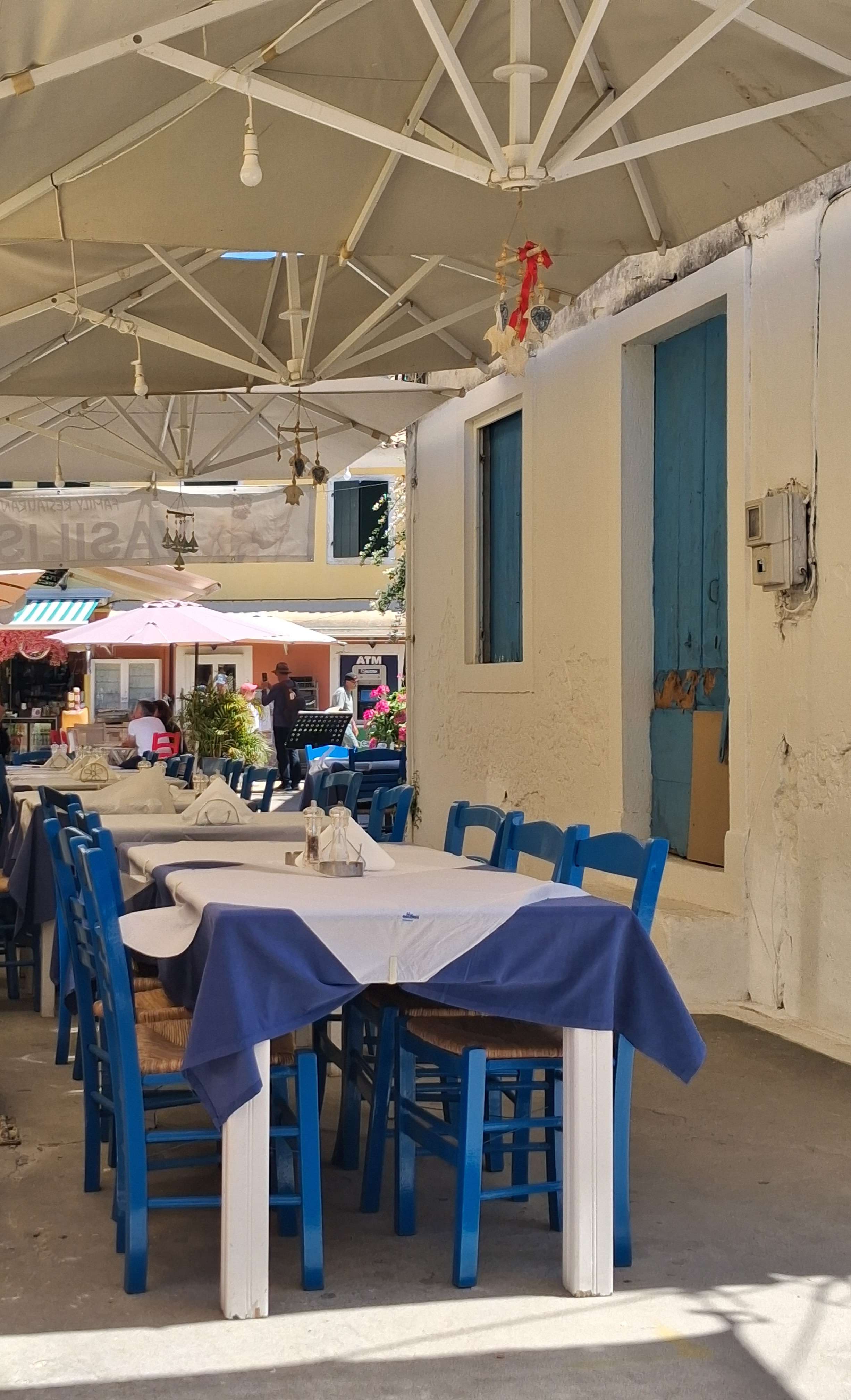
- Gaios (Paxos): The main town is the definition of “cosy.” It is a picturesque Venetian-style port where yachts and fishing boats bob side-by-side. The waterfront is lined with cafes that offer a perfect vantage point for people-watching.
- Antipaxos: A short fast-ferry hop from Gaios takes you to Voutoumi Beach. Known for having some of the clearest turquoise waters in the world, Antipaxos is nearly uninhabited, making it a pristine sanctuary for those looking to escape the summer bustle of the larger islands.
The Blue Horizon
- Take the ferry from Corfu (Port of Lefkimm) to Paxos.
- Explore the narrow streets of Gaios. Transition to Antipaxos for a morning swim in the crystalline waters of Voutoumi.
- Return to Corfu as the sun sets over the Ionian.
- Round trip ferry ticket from Corfu to Paxos: 33 euros – https://www.omio.com/
- Round trip fast ferry ticket from Paxos to AntiPaxos: 20 to 25 euros (on the main Gaios quarter)
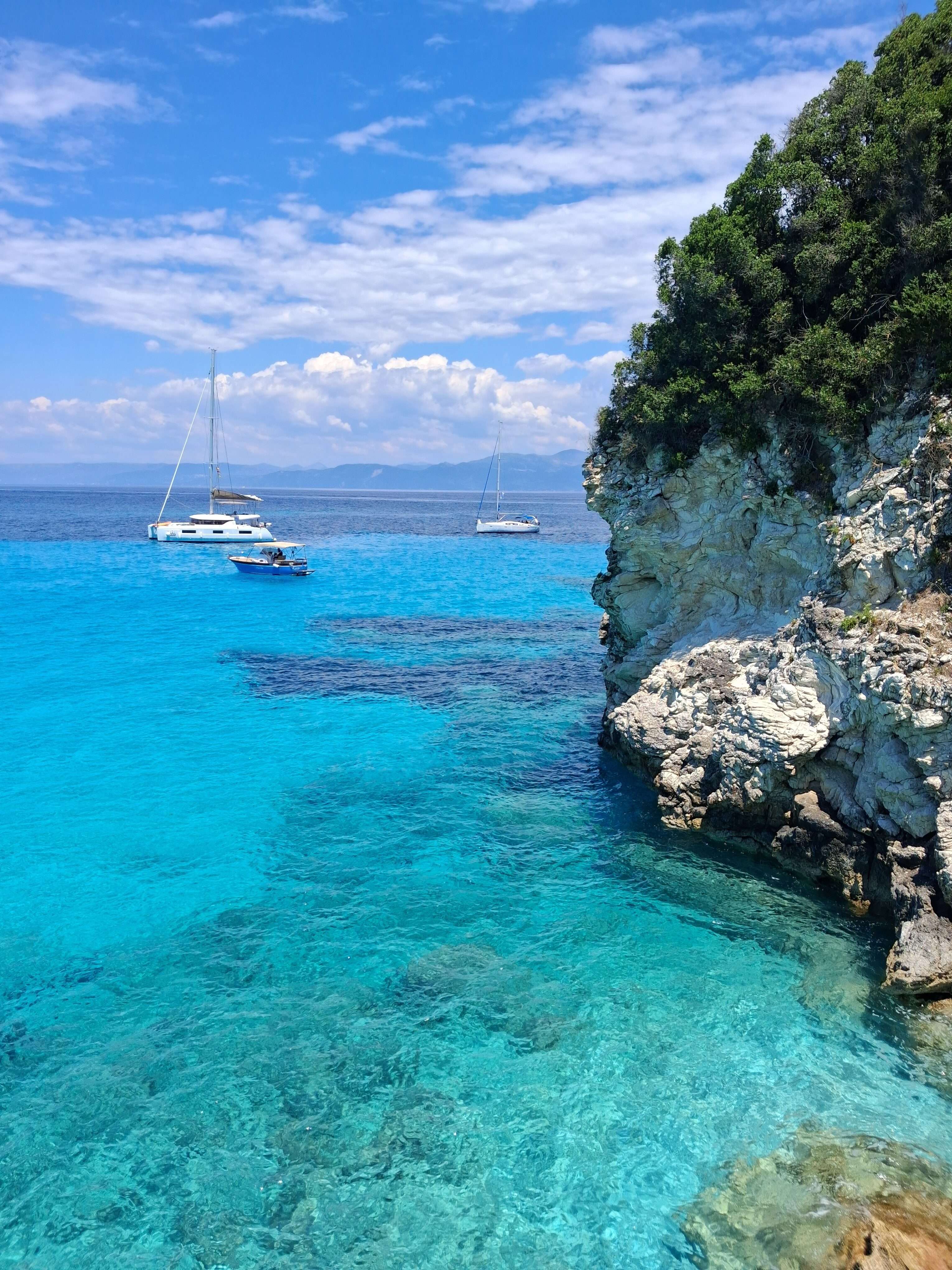
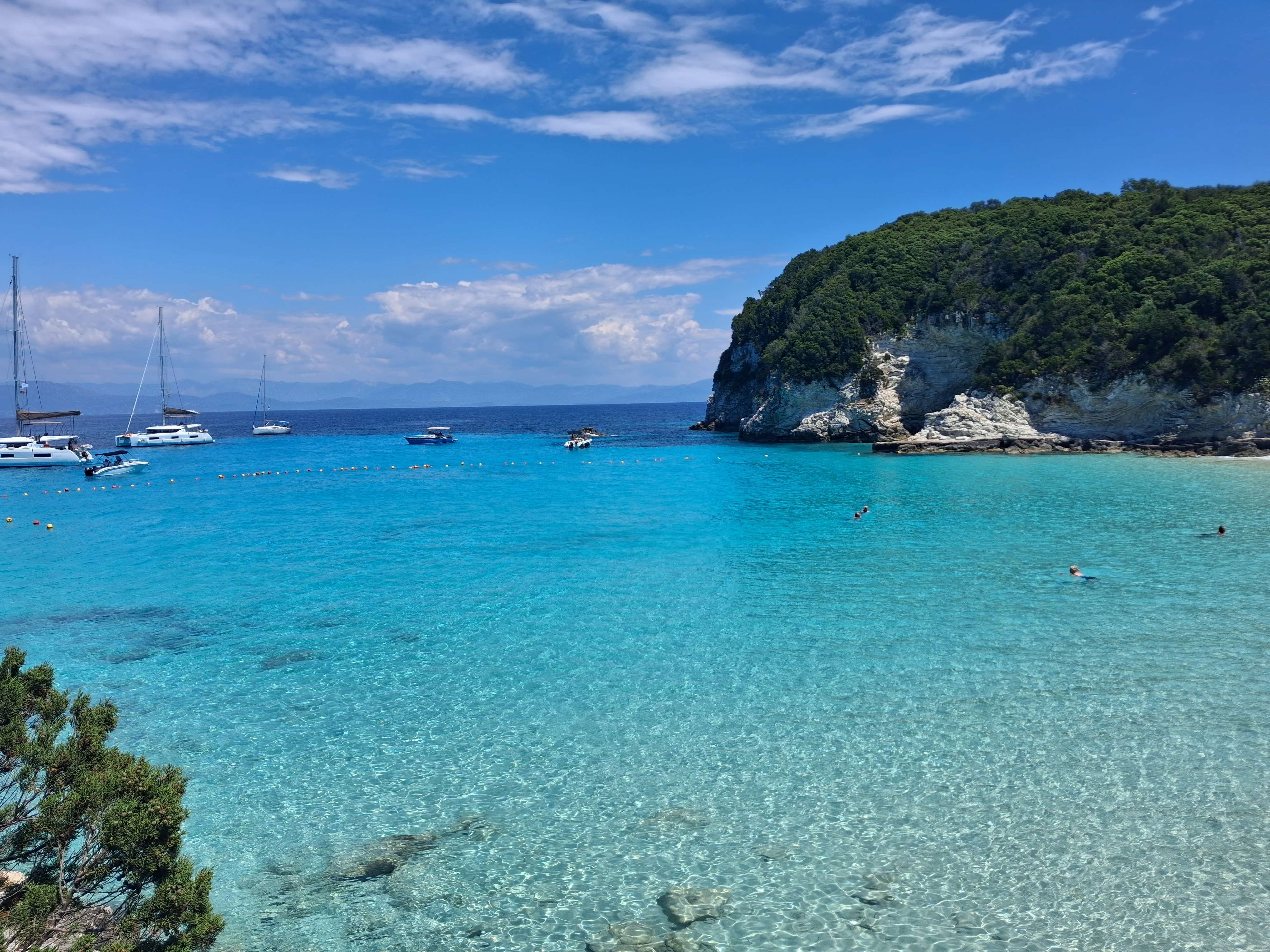
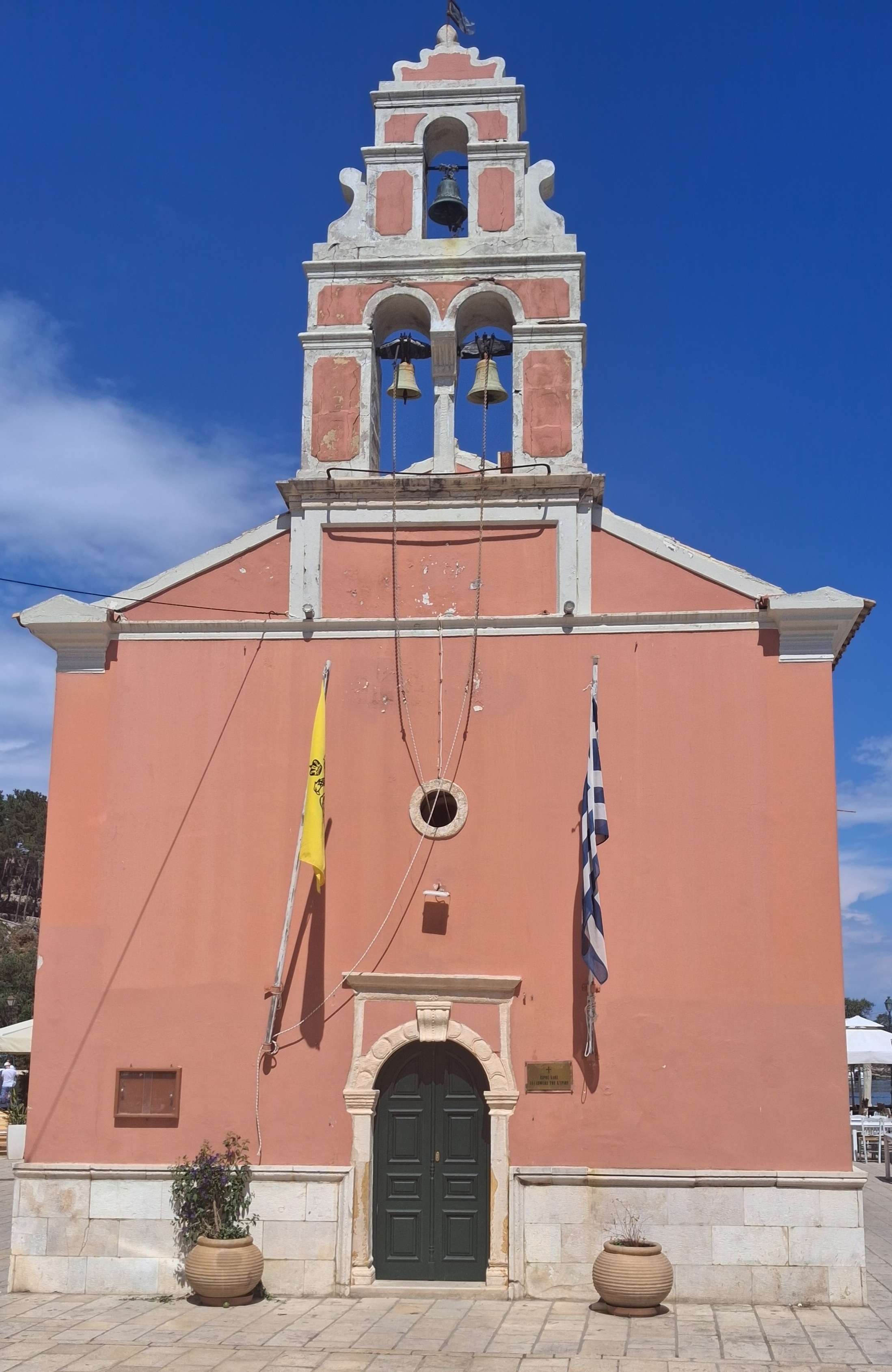
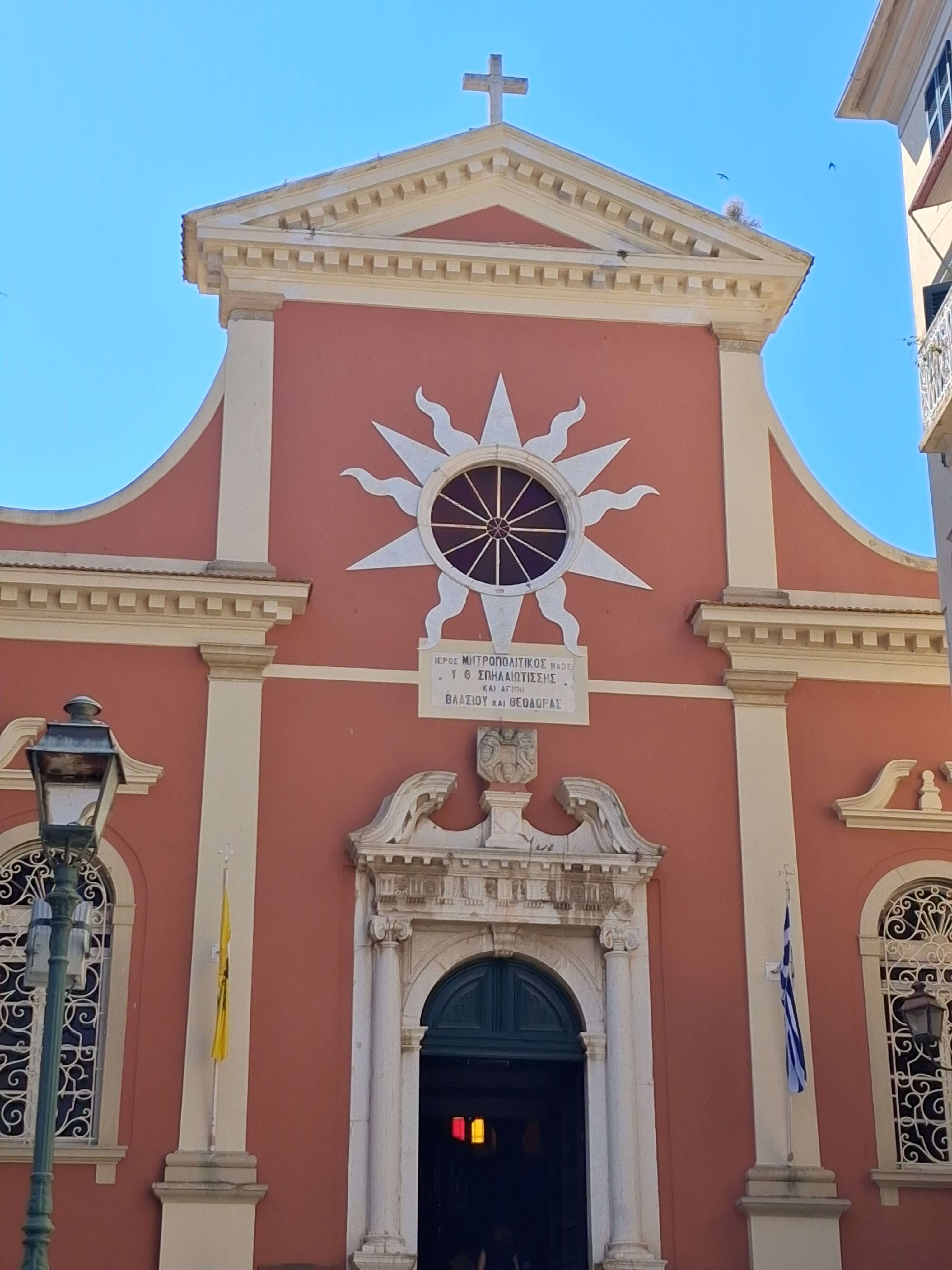
3. Venetian Echoes
- Enter Corfu Town (Kerkira). Park near the center and head to the Old Venetian Fortress. Climbing to the lighthouse provides a 360-degree view of the city and the sea.
- Sunset: Walk the Spianada, the largest square in Greece, and admire the Palace of St. Michael and St. George.
- Dinner: Wander the kantounia (narrow alleys) and dine at BRISK RESTAURANT for a taste of creative Greek cuisine that honors local ingredients.

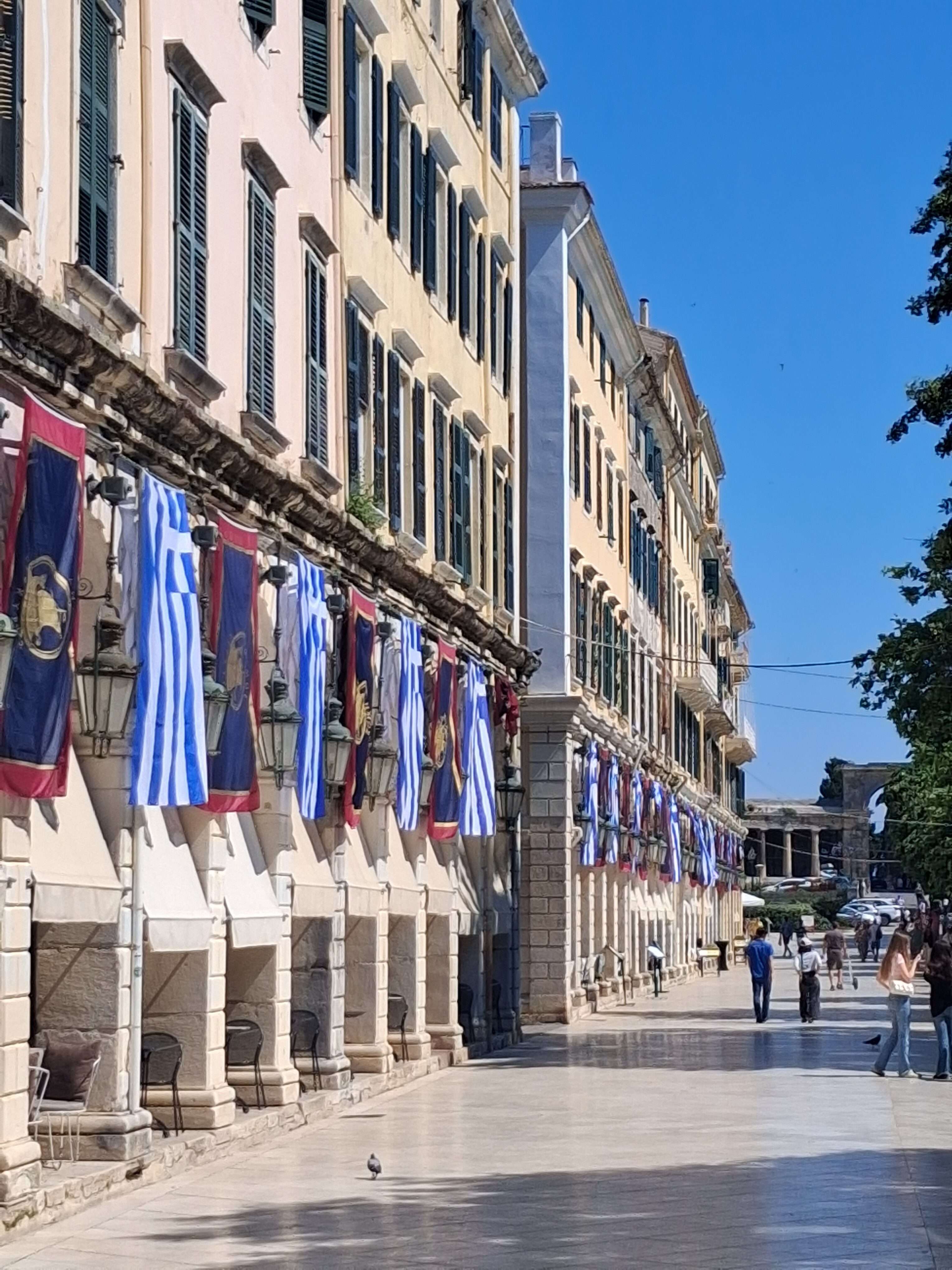
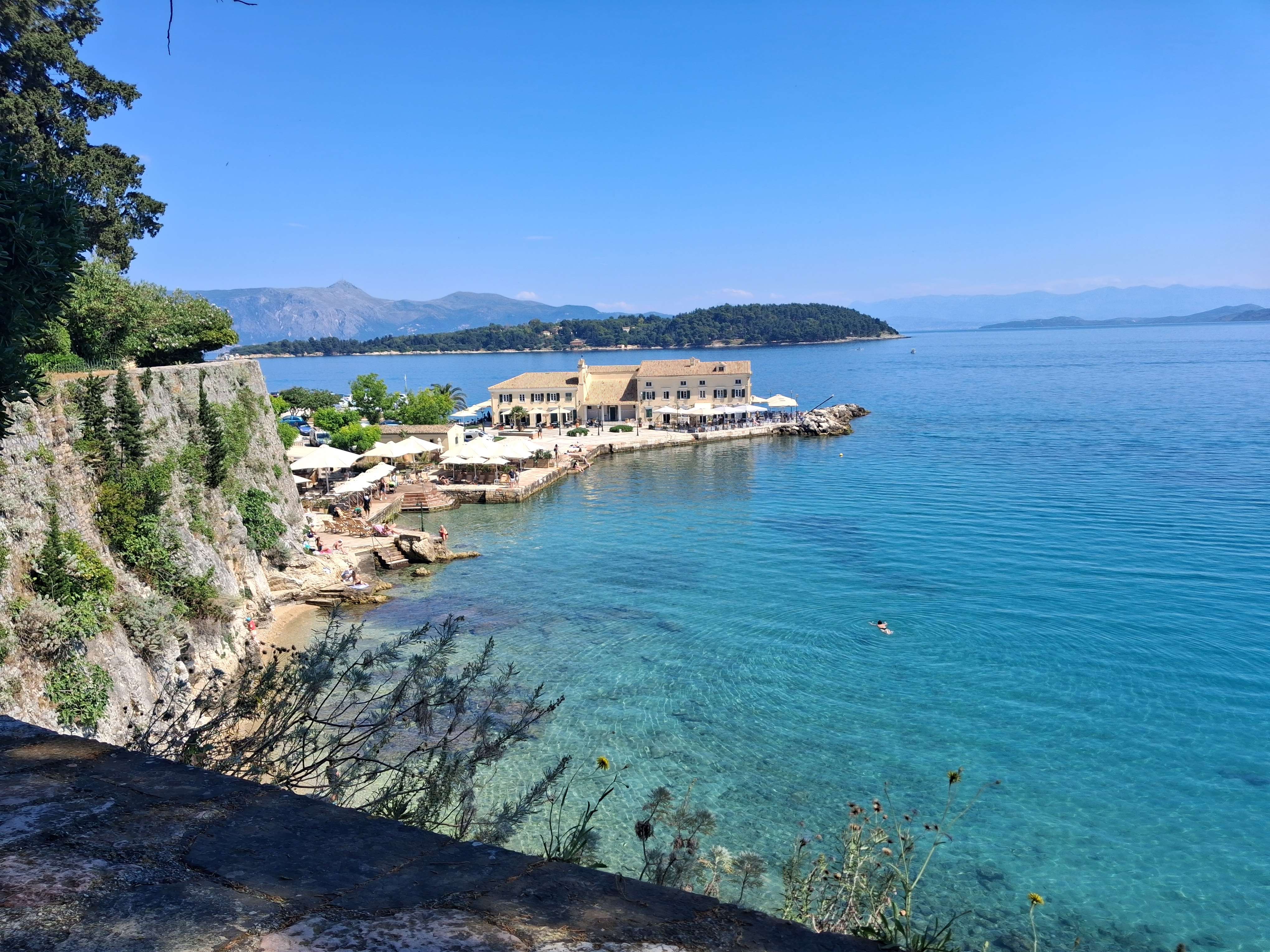
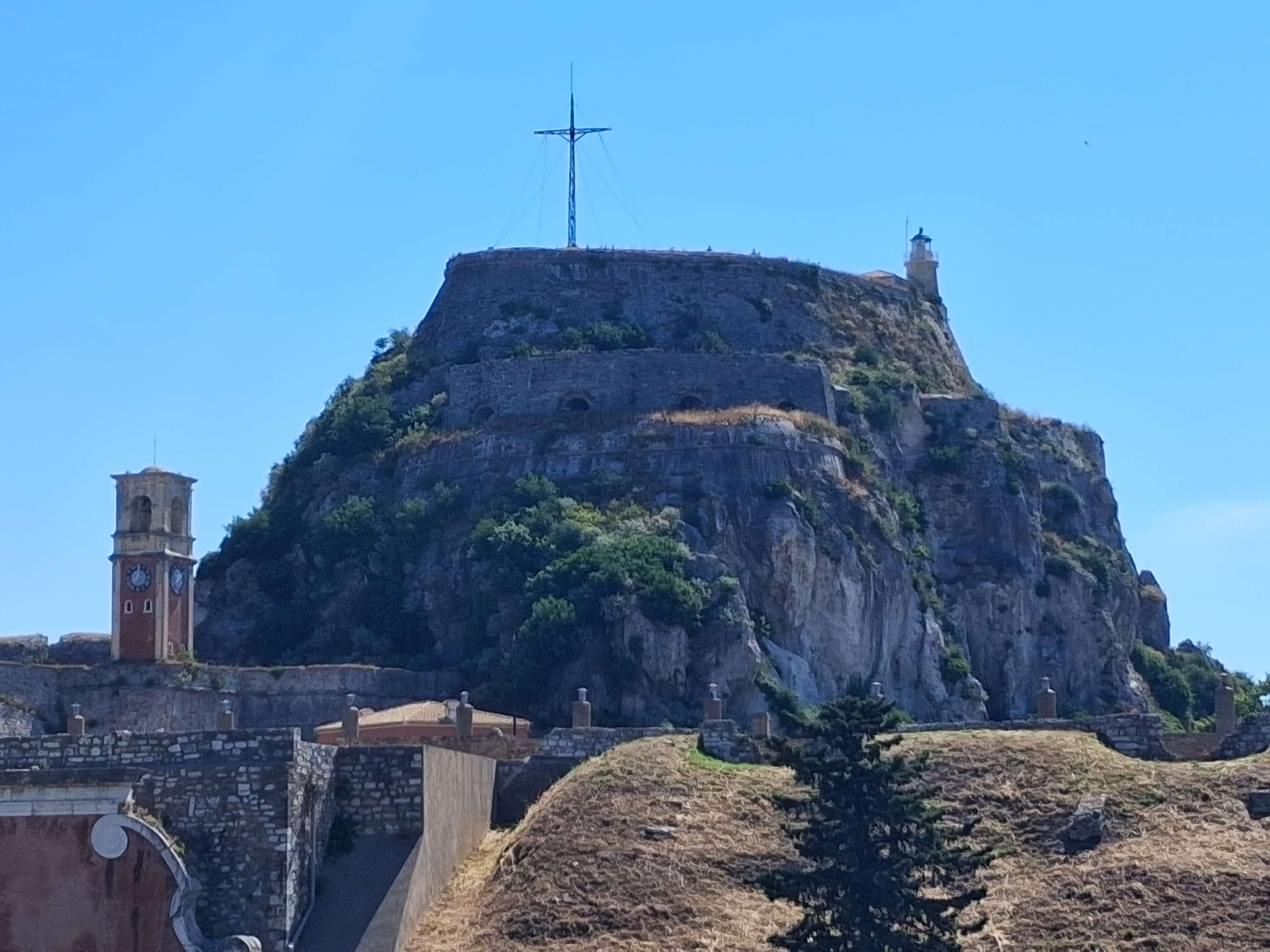
4. Sands of Pelekas
- Morning: Enjoy the fine sands of Glyfada or Kontogialos beach, located right at the foot of the hills in Pelekas.
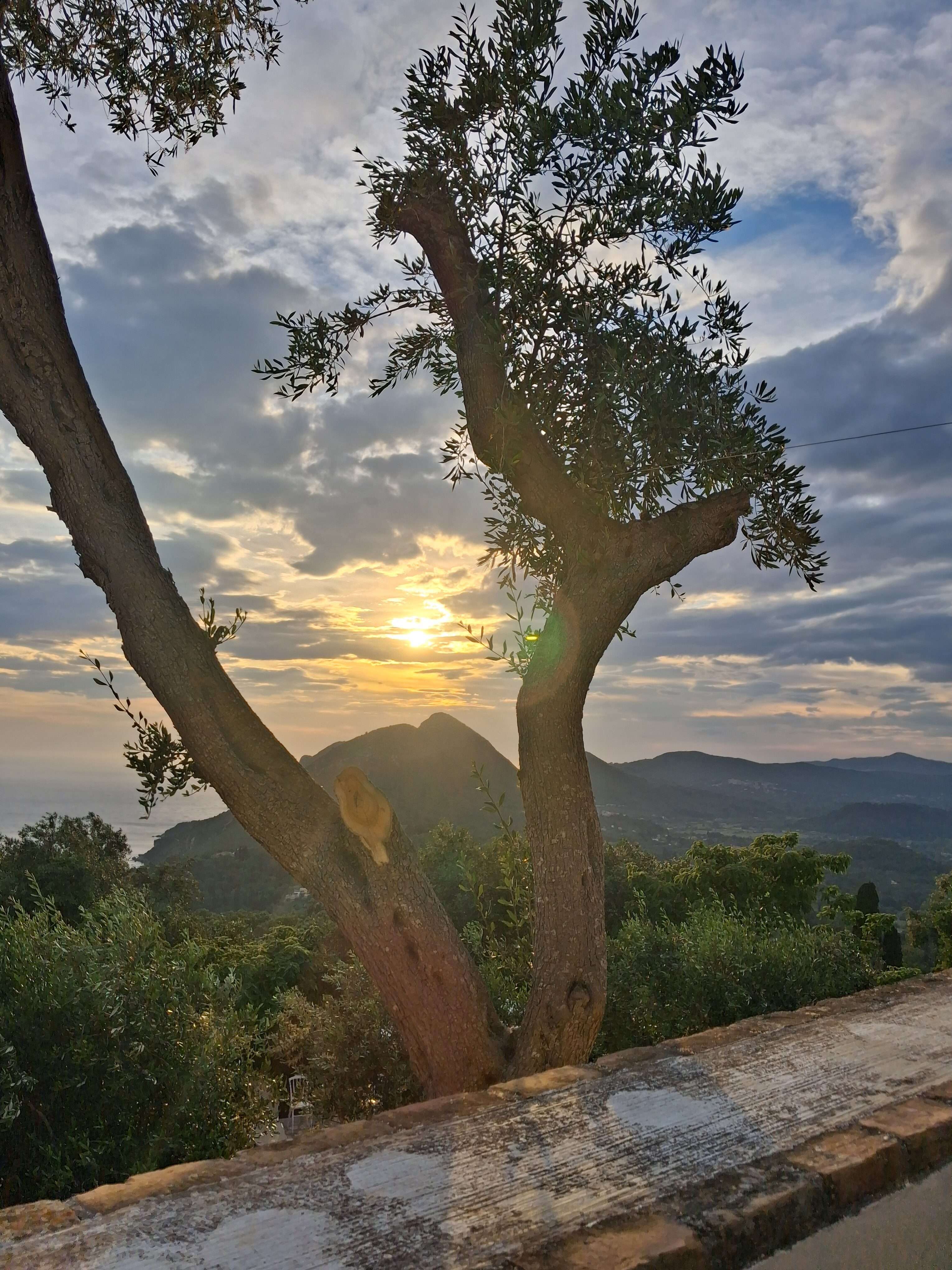
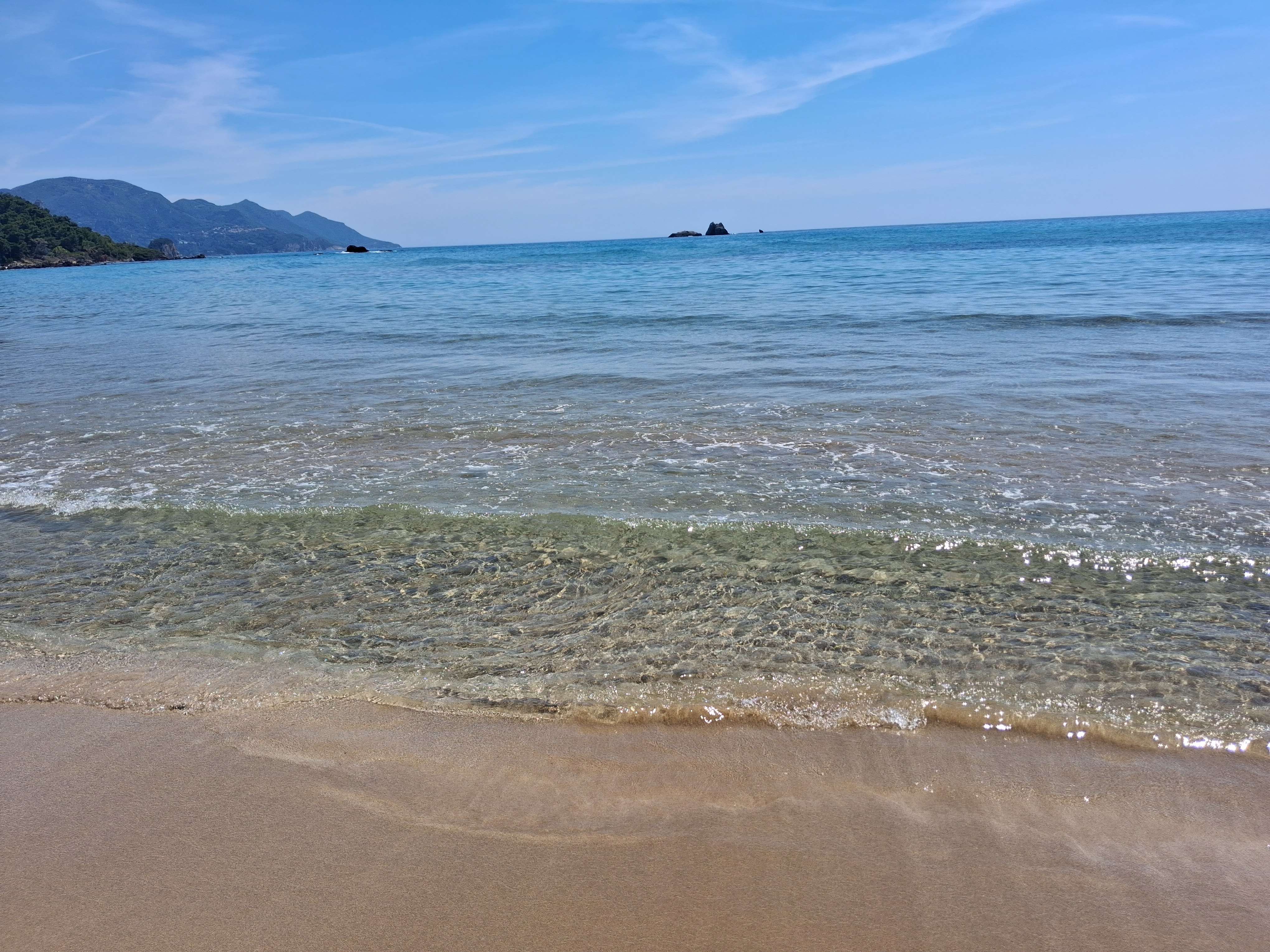
Corfu’s chronic garbage crisis
Corfu’s chronic garbage crisis represents a severe systemic bottleneck that actively undermines the credibility and execution of local eco-friendly initiatives. For decades, the island has struggled with a fractured waste management model, epitomized by the volatile state of the Temploni landfill.
Officially flagged by the European Union and local environmental departments for critical infractions, the site has suffered from unregulated toxic leachate spills into the natural environment, recurring fires, and thousands of tons of unsustainably piled waste bales. This structural failure is compounded by an influx of tourist-generated waste during peak seasons and a historically low municipal recycling rate that hovers at just 5% to 10%.
When basic municipal infrastructure cannot successfully achieve separation at source, processing, or circular composting, the local ecosystem is subjected to continuous pollution. This deep-seated logistical and administrative failure creates an uphill battle for sustainability projects; it is exceptionally difficult to cultivate a green, eco-friendly environment or launch localized conservation programs when the literal bedrock of the island’s infrastructure is struggling under an unmanaged waste crisis.
Solutions for the Future: Sustainable Travel
| Problem | Current Status | Solution for the Future |
| Over-Tourism | Congestion in Corfu Town and popular beaches. | Shifting focus to shoulder seasons (May/September) and promoting the smaller islands like Antipaxos. |
| Waste Management | Infrastructure under pressure from high summer volume. | Implementation of decentralized waste-to-energy projects and localized recycling hubs. |
| Transport Emissions | Heavy reliance on old rental fleets and narrow roads. | Incentivizing the use of small electric vehicles and improving the connectivity of sea-taxis to reduce road traffic. |
6. Call for Action: Preserving the Ionian Blue
The beauty of Corfu and its sister islands is a fragile resource. As we move toward 2030, the focus must shift from “more tourists” to “better tourism.” By supporting local restaurants like Brisk, respecting the natural paths of Porto Timoni, and choosing eco-friendly travel options, visitors can ensure that these islands remain the “stars” of the Mediterranean for generations to come.
The Ionian Sea is a gift of nature; let us treat it with the respect it deserves.
Related Content
- Home – Visit Corfu
- Corfu Tourist – Corfu, Travel, Tourist
- Climate Change: The Harsh Reality and Hopeful Horizon of 2025
- Rozino Bee Venom: A Natural Wonder for Skin and Beyond
- 2024: A Year of Climate Extremes
- 2024: A Year of Unprecedented Heat
- The History of Ecology: From Ancient Roots to Modern Developments
- A first-time guide to Corfu, Greece – Lonely Planet
Related Videos
easyJet: Non-Stop To Net Zero
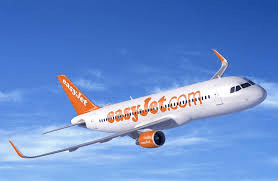
While aviation remains a significant contributor to global carbon emissions, airlines like easyJet are actively transforming their operations to minimize the footprint of every passenger they fly. Under their ambitious “Non-Stop to Net Zero” roadmap, the airline has committed to a journey where, by 2050, commercial flights will contribute zero additional carbon to the atmosphere. This transition relies on sweeping fuel reductions today and pioneering zero-emission flight technologies for tomorrow. To achieve this, easyJet is aggressively renewing its fleet with ultra-modern, fuel-efficient Airbus A320neo aircraft, which slash carbon emissions by 15% and cut noise footprints in half compared to older models. Looking further down the runway, multi-million-pound engineering partnerships with giants like Rolls-Royce are accelerating the development of revolutionary hydrogen combustion engines and advanced carbon capture systems to eliminate or safely store any remaining residual emissions.

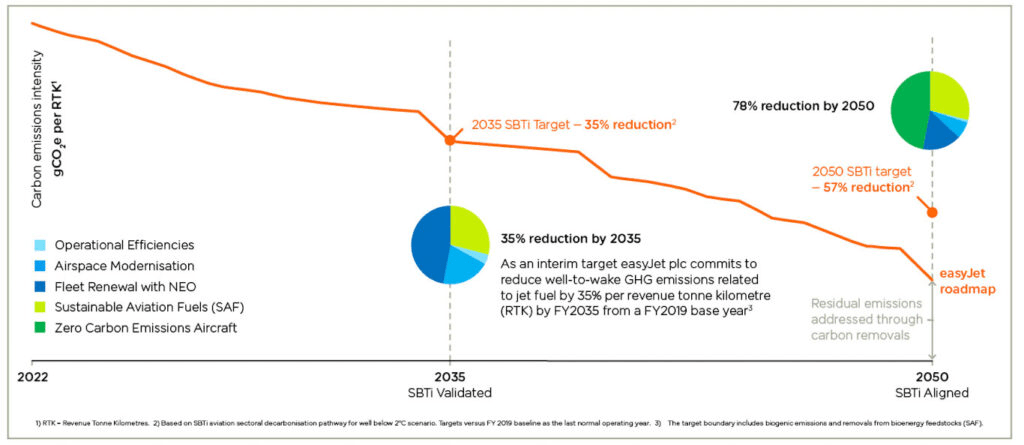
This chart illustrates easyJet’s decarbonization roadmap from 2022 to 2050. It outlines how the airline plans to reduce its carbon emissions intensity—measured in grams of CO₂ equivalent per Revenue Tonne Kilometre (gCO_2e per RTK)—to align with the Science Based Targets initiative (SBTi) for a “well below 2°C” global warming scenario.
Here is a breakdown of what the chart shows:
1. The Core Timeline & Trajectory
- The Orange Line (easyJet Roadmap): This represents the projected downward trajectory of easyJet’s carbon emissions intensity.
- The Y-Axis: Tracks the carbon emissions intensity per revenue tonne kilometer (gCO_2e per RTK).
- The X-Axis (Timeline): Marks three key milestones: the baseline beginning in 2022, an interim target in 2035 (SBTi Validated), and the ultimate goal in 2050 (SBTi Aligned).
2. Interim Milestone: 2035 Target (35% Reduction)
- The Goal: easyJet commits to reducing its “well-to-wake” greenhouse gas emissions related to jet fuel by 35% by FY2035, using FY2019 as the baseline year.
- The Strategy (2035 Pie Chart): To achieve this first 35% reduction, the company relies heavily on three immediate pillars:
- Fleet Renewal with NEO: Upgrading to more efficient Airbus NEO aircraft (dark blue sector, making up the largest share of the 2035 effort).
- Operational Efficiencies & Airspace Modernisation: Optimizing flight paths and ground operations (light blue sectors).
- Sustainable Aviation Fuels (SAF): Beginning the integration of biofuels (lime green sector).
3. Ultimate Milestone: 2050 Goal (78% Direct Reduction)
- By 2050, the airline targets a 78% direct reduction in carbon emissions intensity compared to the baseline.
- The mechanisms shifting by 2050 introduce radical technological changes:
- (Bright green sector) This becomes the dominant driver of emission reductions by 2050, representing the introduction of revolutionary technologies like hydrogen-powered propulsion (developed with partners like Rolls-Royce).
- (Lime green sector) Scaling up significantly to form the second largest share of the reduction.
- (Blue sectors) Still present but playing a smaller proportional role as technology matures.
4. Bridging the Gap: SBTi Alignment vs. Residual Emissions
- The chart shows that easyJet’s internal roadmap (the orange line) actually aims to outpace the official SBTi targets.
- In 2035, easyJet’s roadmap exactly hits the 35% SBTi target.
- By 2050, the official SBTi target requires a 57% reduction, but easyJet’s roadmap aims for an aggressive 78% reduction.
- The remaining gap between the 78% direct operational reduction and absolute net zero (the remaining gray space at the bottom right) is labeled to be addressed through carbon removals (such as carbon capture technology) to neutralize any final remaining emissions.