
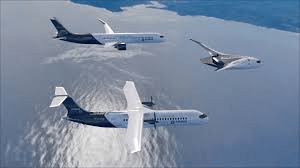
BLAGNAC — In a landmark announcement, Airbus has revealed its next-generation narrowbody aircraft, designed to revolutionize air travel by prioritizing sustainability. Slated for its maiden flight by 2030, this cutting-edge plane aims to slash lifecycle carbon emissions by up to 80% compared to traditional jet fuel-powered aircraft, thanks to its compatibility with 100% Sustainable Aviation Fuel (SAF).
The aircraft combines state-of-the-art aerodynamics, hybrid-electric propulsion systems, and advanced lightweight materials to deliver unprecedented fuel efficiency. This bold step underscores Airbus’s commitment to addressing the aviation industry’s environmental challenges while meeting growing global demand for air travel.
Redefining Air Travel: The Aircraft’s Innovative Features
1. Wings of the Future: Biomimicry Meets Engineering
At the heart of the design is a revolutionary wing concept developed at Airbus’s Wing Technology Centre in Filton, UK. These wings are inspired by nature and leverage advanced technologies to maximize efficiency:
- Folding wingtips enhance aerodynamic performance without compromising airport gate compatibility.
- Laminar flow technology reduces drag, boosting fuel efficiency by an impressive 10%.
2. Hybrid-Electric Propulsion: Powering the Future
In collaboration with CFM International, Airbus is advancing the RISE (Revolutionary Innovation for Sustainable Engines) program, which introduces groundbreaking propulsion technologies:
- Open-fan engine architecture, designed to cut fuel consumption by 20%.
- Hybrid-electric systems powered by lithium-ion and solid-state batteries, enabling energy-efficient taxiing and auxiliary operations.
3. Sustainable Aviation Fuel (SAF): A Game-Changer
The aircraft will be fully compatible with 100% SAF, a critical milestone in reducing aviation’s carbon footprint. However, the transition to SAF faces significant hurdles:
- Current production meets less than 0.1% of global jet fuel demand.
- High costs and infrastructure gaps remain barriers to widespread adoption.
4. Eco-Friendly Materials: Building a Greener Plane
Airbus is pushing the boundaries of sustainable manufacturing with innovative materials:
- Carbon fiber-reinforced thermoplastics for lighter, stronger airframes.
- Bio-composites made from renewable resources to minimize reliance on fossil fuels.
Challenges on the Horizon: Obstacles to Overcome
Despite the promise of this new aircraft, the aviation industry still grapples with several ecological and logistical challenges:
1. Scaling Up SAF Production
- Global SAF output is negligible compared to the vast demand for conventional jet fuel.
- Achieving scale requires massive investments and supportive government policies.
2. Battery Limitations for Electric Flight
- Current battery technology lags far behind the energy density of jet fuel, making fully electric commercial flights impractical for now.
- Hybrid systems serve as a bridge, but long-haul electric aviation remains a distant goal.
3. Infrastructure Overhaul
- Airports need upgrades to handle SAF storage and distribution.
- Charging stations for hybrid-electric aircraft must be developed globally.
4. Regulatory and Certification Barriers
- New propulsion systems, such as open-fan engines, require rigorous safety testing and certification.
- Global standards for SAF blending ratios are still evolving, creating uncertainty.
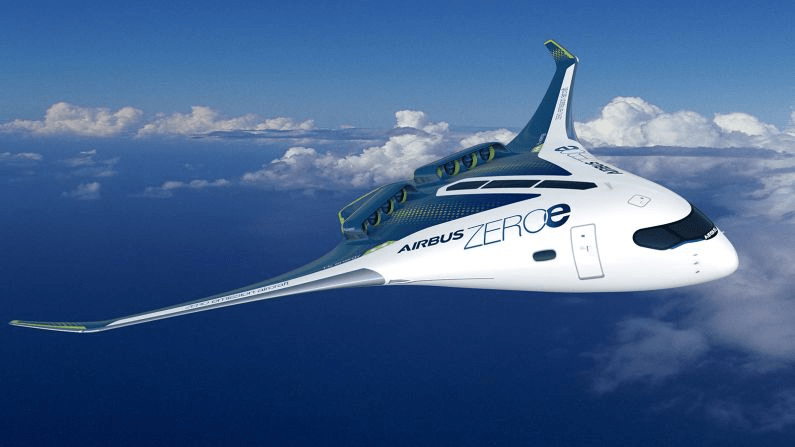
Airbus’s Vision for 2035: A Blueprint for Sustainable Aviation
At the 2025 Summit, Airbus unveiled its ambitious roadmap for the future:
- Entry into service by 2035 for the next-gen narrowbody aircraft.
- 20-30% better fuel efficiency compared to the A320neo family.
- Integration of AI-driven predictive maintenance and real-time flight optimization systems.
Bruno Fichefeux, Airbus Head of Future Programmes, shared his vision:
“We’re not just building an aircraft; we’re shaping the future of flight. Sustainability and innovation are at the core of everything we do.”
Karim Mokaddem, Head of R&D, added:
“Every decision—from propulsion systems to materials—is carefully evaluated to maximize environmental benefits.”
Can Airbus Deliver on Its Green Promise?
While Airbus’s new aircraft represents a transformative leap toward decarbonization, its success hinges on several factors:
✅ Government support for scaling SAF production.
✅ Industry-wide collaboration to modernize infrastructure.
✅ Ongoing investment in hydrogen and electric propulsion technologies.
If these challenges are addressed effectively, this aircraft could redefine commercial aviation—making it cleaner, quieter, and more efficient than ever before.
Related Content
- France’s Massive Natural Hydrogen Reserve: A Game Changer for Clean Energy and the Planet
- Elon Musk’s Fellowship in the Royal Society: Implications for Ecology and Preserving Our Planet
- A Planetary Health Check: Crossing Critical Boundaries
- Crossing the Seventh Planetary Boundary: A Dire Warning and Path to Action
- Getting Teased for Doing It for the Planet”: The Struggles of Going Vegetarian in a BBQ-Centric World
- Ecology, the Olympics, and the Future of Our Planet
- Airbus Unveils New Narrowbody Aircraft Design, First Flight by 2030 – Aviation A2Z
- Soaring towards future aircraft | Airbus
- Airbus advances key technologies for next-generation single-aisle aircraft | Airbus
- Airbus narrows hydrogen-powered flight focus to a single aircraft design | Hydrogen Insight
- Airbus sets out its stall ahead of new plane development | Reuters