
1. Executive Summary & Overview
In the high-stakes race for Artificial General Intelligence (AGI), computing power is the ultimate currency. Elon Musk’s artificial intelligence venture, xAI, has pushed the boundaries of rapid infrastructure deployment by constructing and expanding its flagship supercomputing facility, Colossus, alongside its massive successor iteration, Colossus 2. To bypass the multi-year delays associated with upgrading traditional municipal electrical grids, xAI took an unprecedented route: purchasing and reconditioning massive General Electric (GE) aircraft engines—originally designed to launch Boeing 747 and 767 wide-body jets into the atmosphere—and converting them into stationary, natural gas-fired power turbines.
While this novel engineering maneuver delivered hundreds of megawatts of off-grid power in record time, it has ignited a fierce environmental and social battle. Local residents, clean-air advocates, civil rights organizations, and legal authorities have raised alarms over dramatic surges in nitrogen oxides NO, carbon monoxide CO), volatile organic compounds (VOCs), formaldehyde, and pervasive low-frequency noise pollution.
This comprehensive report dives into the mechanical engineering behind converting aviation turbines into ground-based generators, analyzes the environmental and legal fallout in local communities, compares modern industrial energy solutions, and proposes actionable technical alternatives for a sustainable AI future.
2. Deep Dive: Jet Engines on the Ground
The Mechanical Transformation: From Jet Thrust to Electrical Torque
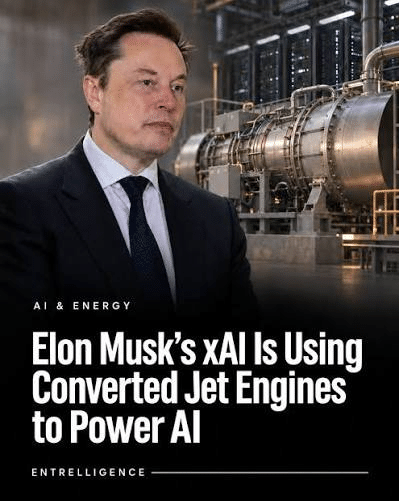
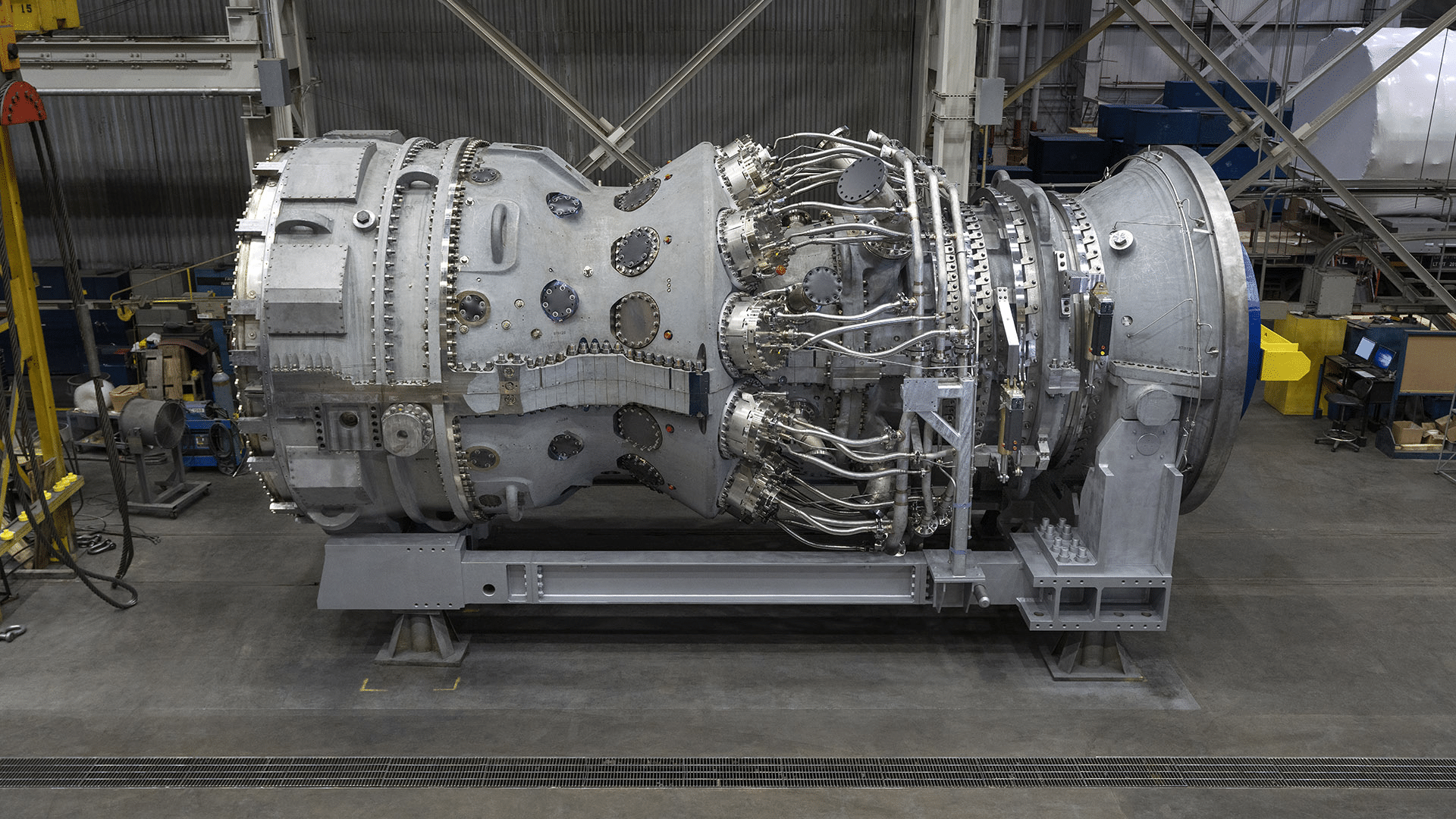
The transition of an aircraft engine from airborne thrust generation to stationary electricity production leverages a concept known as aeroderivative gas turbine engineering. Manufactured primarily by General Electric (such as the legendary LM6000 or CF6 variants derived from commercial airliners), these engines are engineered for extreme power-to-weight ratios and thermal durability.
When mounted under the wing of a Boeing 747 or 767, the engine burns aviation kerosene (Jet A-1) to generate high-velocity exhaust gases, creating forward thrust. To adapt these powerplants for stationary data center support, industrial engineering firm ProEnergy executes a comprehensive structural overhaul:
- Fuel System Conversion: The liquid fuel injectors and combustion chambers are replaced with natural gas fuel manifolds and dry low-emissions (DLE) combustor assemblies capable of burning methane (CH_4).
- Shaft Coupling & Gearbox Integration: Instead of pushing air backwards to create thrust, the core high-pressure and low-pressure turbine shafts are coupled through a heavy-duty reduction gearbox to a stationary electrical generator (alternator).
- Air Intake & Exhaust Redirection: Air intake filters are expanded drastically to prevent dust ingestion at ground level, while the high-velocity exhaust is routed through massive stationary silencers and stack systems.
Each of the eight reconditioned turbines deployed at xAI’s facility generates approximately 50 Megawatts (MW) of continuous electrical output, yielding a collective capacity of 400 MW from the jet-engine array alone. This single temporary installation generates enough electricity to power roughly 120,000 standard American homes.
Why Traditional Grid Connections Failed the AI Timeline
Modern large language models (LLMs) demand computational clusters comprising hundreds of thousands of advanced GPUs (such as NVIDIA H100, H200, and Blackwell architectures). A single high-density server rack can draw between 40 kW and 120 kW of power, creating data center power densities never seen before in commercial real estate.
Under traditional utility frameworks, securing a 1.2 Gigawatt (GW) grid interconnection agreement requires:
- Comprehensive regional transmission organization (RTO) impact studies (18–36 months).
- High-voltage substation construction and transformer procurement lead times (24–48 months).
- Right-of-way land acquisitions for new transmission corridors (24–60 months).
Faced with a 3-to-5-year waiting period to draw power from the local utility grid, xAI bypassed grid queues entirely. By procuring aeroderivative gas turbines that could be delivered via flatbed trailer and commissioned within weeks, Musk multiplied the facility’s computing capacity by sevenfold in a single summer.
3. The Environmental & Health Footprint
Air Quality Metrics & Permitting Contradictions
The rapid deployment of converted aviation turbines has come at a severe cost to local ambient air quality. Aircraft engines—even when modified for natural gas—operate at higher combustion temperatures and pressure ratios than purpose-built, combined-cycle utility power plants. This thermodynamic profile leads to incomplete combustion and high thermal formation of pollutants.
Permit documentation and environmental monitoring filings reveal striking concessions granted to the facility:
- Carbon Monoxide (CO): The operating permit granted to xAI authorizes a carbon monoxide emissions ceiling for the eight modified jet turbines that is twice as high per megawatt-hour as the limits enforced on modern, purpose-built industrial generators on the same site.
- Volatile Organic Compounds (VOCs): The permit permits up to 25% higher VOC emissions, contributing directly to ground-level ozone (smog) formation.
- Formaldehyde (CH2{O}): Official regulatory disclosures explicitly list emissions of formaldehyde—a classified human carcinogen—resulting from the unburned hydrocarbon fractions produced by aeroderivative combustion cycles.
- Nitrogen Oxides (NO): According to investigative reports compiled by Reuters, across the 57 total turbines operating across the Colossus complex, 30 primary units generate approximately 2,500 tonnes of NO and 4,000 tonnes of CO annually.
NO emissions react with sunlight and atmospheric oxygen to form ground-level ozone (O3) and fine particulate matter (PM2.5). Prolonged exposure to these compounds triggers severe respiratory inflammation, exacerbates childhood asthma, and increases cardiovascular mortality rates in surrounding neighborhoods.
Acoustic Pollution: Low-Frequency Noise & Human Toll
Beyond chemical air pollution, nearby residents face a relentless acoustic burden. Unlike high-frequency jet engine whines heard at airports, stationary aeroderivative turbines operating under continuous industrial load emit intense low-frequency noise (LFN) ranging between 20 Hz and 200 Hz.
Low-frequency sound waves travel across vast distances with minimal atmospheric attenuation and easily penetrate standard residential building envelopes, causing structural vibrations, window rattling, and constant internal acoustic resonance.
Residents living within a few hundred meters of the Colossus facility report:
- Chronic sleep deprivation due to an unceasing 24/7 background hum.
- Elevated psychological stress, anxiety, and hypertension.
- Inability to utilize outdoor residential spaces or open windows.
4. Legal Battles, Civil Rights & Public Backlash
The Regulatory Clash: SELC, NAACP, and Federal Lawsuits
The environmental and human rights fallout has escalated into a legal assault on multiple fronts:
- The Southern Environmental Law Center (SELC) Challenge: Lawyers representing the SELC filed formal legal petitions contesting the air quality permits issued by state regulators. The SELC contends that state authorities improperly exempted xAI from rigorous Prevention of Significant Deterioration (PSD) review under the Clean Air Act. The filings argue that xAI drastically understated projected emissions figures and relied on outdated, inefficient jet engines rather than enforcing Best Available Control Technology (BACT).
- NAACP & Civil Rights Litigation: The NAACP, alongside local grassroots environmental justice coalitions, launched federal legal actions alleging that xAI operated up to 27 temporary combustion turbines without mandatory federal Title V operating permits. The lawsuits emphasize that the toxic emission plumes disproportionately impact historically underserved, predominantly Black communities in the surrounding zip codes.
- Federal Court Rulings: In a major setback for the tech firm, a federal judge denied xAI’s motion to dismiss the environmental coalition’s suit, allowing claims regarding unauthorized, unpermitted emissions to proceed toward trial.
The Colonial Hills Buyout Controversy
As public outrage mounted, residents of the adjacent Colonial Hills neighborhood initiated a class-action lawsuit against xAI and SpaceX, seeking damages for severe noise nuisance, loss of quiet enjoyment, and plummeting residential property values.
In response, Elon Musk and his representatives executed a controversial mitigation strategy: offering direct cash buyouts to homeowners located closest to the facility perimeter. However, the purchase contracts came with a strict legal caveat: sellers were required to sign non-disclosure agreements (NDAs) and waive all rights to participate in existing or future class-action litigation against xAI and affiliated entities.
Critics and legal scholars view these buyout clauses as a tactic to neutralize legal liability, silence community opposition, and purchase environmental indemnity rather than installing proper pollution control hardware.
5. Technical Benchmark: Jet Engines vs. Clean Power Alternatives
To understand the magnitude of xAI’s engineering compromise, we must evaluate aeroderivative turbines against modern industrial power generation options across key technical, operational, and environmental metrics.
Performance & Environmental Benchmark Matrix
| Feature / Metric | Converted Jet Turbines (GE 747/767) | Modern Combined-Cycle Gas (CCGT) | Industrial Solar + Battery Storage (BESS) | Small Modular Reactors (SMRs / Nuclear) | Grid Interconnection (Regional Utility) |
| Deployment Speed | Ultra-Fast (1–3 Months) | Slow (24–36 Months) | Moderate (6–18 Months) | Extremely Slow (60–120 Months) | Extremely Slow (36–60 Months) |
| Power Output (Per Unit) | ~50 MW per turbine | 200–500 MW per block | 100–500 MW array | 50–300 MW per module | Unlimited (Grid capacity) |
| Thermal Efficiency | Low (32% – 38%) | Very High (58% – 64%) | N/A (Direct Conversion) | High (~33% – 37% Thermal) | Varies (Regional mix) |
| $\text{NO}_x$ Emissions | Very High (~25-50 ppm) | Low (< 2.5 ppm w/ SCR) | Zero (0 ppm) | Zero (0 ppm) | Varies by generation mix |
| $\text{CO}$ Emissions | Extremely High | Ultra-Low | Zero | Zero | Varies by generation mix |
| Noise Impact (at 100m) | Extreme (> 85 dBA, LFN) | Moderate (55–65 dBA) | Low / Negligible (< 45 dBA) | Negligible (< 45 dBA) | Low (Substation hum) |
| Footprint / Density | Compact / Modular | Moderate | Very Large (Land Intensive) | Very Compact | Minimal (Substation only) |
| Water Intensity | Low / Moderate | High (Cooling Towers) | Zero | High (Thermal Cooling) | Varies |
| Levelized Cost (LCOE) | High (Incomplete burn) | Low / Moderate | Moderate (High CapEx) | High Initial / Low Long-Term | Moderate (Regulated tariff) |
Analysis of Technical Trade-Offs
The benchmark matrix highlights the core tension of the AI era: speed versus sustainability.
- Converted jet turbines score highest in deployment speed, allowing xAI to bring 400 MW online within months. However, their single-cycle thermal efficiency (32–38%) pales in comparison to combined-cycle utility installations (which exceed 60% efficiency by capturing waste heat to drive secondary steam turbines).
- Consequently, jet turbines burn significantly more natural gas per megawatt-hour generated, multiplying fuel costs and atmospheric emissions proportionally.
6. Solutions for the Future
The environmental crisis at Colossus underscores an urgent requirement for the hyperscale AI industry: high-density, low-emission, rapidly deployable power architectures. To scale AI infrastructure without compromising public health or local air sheds, tech operators must transition through a phased technological roadmap.
1. Immediate Retrofit Solutions: SCR and Catalytic Oxidation
To mitigate immediate harm to surrounding communities, any stationary jet turbine array must be retrofitted with advanced exhaust gas treatment systems:
- Selective Catalytic Reduction (SCR): By injecting anhydrous ammonia NH3 into the exhaust stream ahead of a catalyst bed, SCR systems convert harmful NO into harmless nitrogen gas N2 and water vapour H2O, achieving emission reductions of over 90%.
- Catalytic Oxidation Systems: Installing precious-metal oxidation catalysts directly behind the turbine exhaust reduces carbon monoxide CO, volatile organic compounds (VOCs), and unburned formaldehyde by 90% to 95%.
- Advanced Sound Attenuation Enclosures: Enclosing the engine skids within double-walled acoustic enclosures, adding tuned inlet/outlet silencers, and constructing 30-foot perimeter sound barriers can attenuate low-frequency noise by 25 to 35 decibels, restoring acoustic compliance at property boundaries.
2. Microgrid Hybridization: Solar, Storage & Hydrogen Blending
Rather than relying solely on fossil-fuel combustion, hyperscale data centers can construct hybrid microgrids:
- Utility-Scale Solar + Battery Energy Storage Systems (BESS): Pairing solar arrays with multi-megawatt-hour lithium-iron-phosphate (LFP) battery banks allows data centers to shave peak loads during high-solar hours, reducing reliance on gas turbines.
- Hydrogen Co-Firing: Modern aeroderivative turbines can be retrofitted to burn a blended fuel mix containing up to 30–50% Green Hydrogen H2. As hydrogen infrastructure matures, transitioning to 100% hydrogen combustion eliminates carbon dioxide and carbon monoxide emissions entirely.
3. Deep Decarbonization: Small Modular Reactors (SMRs) & Geothermal
For long-term, gigawatt-scale baseload power without carbon or air pollutant emissions:
- Small Modular Reactors (SMRs): Advanced nuclear designs (such as sodium-cooled fast reactors or high-temperature gas-cooled reactors) offer factory-fabricated 50 MW to 300 MW power modules. Co-locating SMRs directly with AI campuses provides continuous, zero-carbon power with a minimal physical land footprint.
- Next-Generation Geothermal Systems: Utilizing directional drilling and enhanced geothermal systems (EGS) enables data centers to tap deep subterranean heat, driving steam turbines 24 hours a day, 365 days a year, regardless of weather conditions.
7. Humorous Interlude: “A Jet Engine in the Backyard”
Excerpt from a local neighborhood group chat:
Neighbor A:“Did anyone else feel their coffee table vibrating at 3:15 AM?”
Neighbor B:“Yeah, that’s just Elon launching a 747 in the field behind the gas station. Don’t worry, it’s not flying anywhere, it’s just trying to figure out how to generate a picture of a cat in a tuxedo.”
Neighbor A:“Oh, good! For a second I thought my house was built on a fault line. Glad to know it’s just the raw horsepower of a wide-body jet liner heating up the atmosphere so a neural network can rewrite my cousin’s resume.”
While the engineering ambition required to bolt eight airliner engines to the ground and plug them into a supercomputer is undeniably impressive in a sci-fi, “Mad Max meets Silicon Valley” fashion, living next to it is a starkly different reality. The concept of “moving fast and breaking things” takes on a concerning literal meaning when the things being broken are federal air quality standards and residential windowpanes.
8. Conclusion & Call to Action
The crisis surrounding xAI’s Colossus facility represents a pivotal moment in the evolution of modern technology infrastructure. The rapid expansion of artificial intelligence is colliding directly with environmental protection, public health, and municipal energy planning.
Bypassing grid queue delays by deploying unmitigated, high-emission aviation engines sets a dangerous precedent for the tech sector. If left unregulated, the race for computational dominance risks sacrificing decades of hard-won environmental justice gains and clean air progress.
A Call for Responsible AI Infrastructure
To ensure that the digital future does not undermine physical public health, key stakeholders must take decisive action:
- For AI Infrastructure Developers (xAI, Hyperscalers): Immediately commit to retrofitting all temporary generation equipment with Selective Catalytic Reduction (SCR) and Catalytic Oxidation systems. Prioritize long-term, zero-emission Power Purchase Agreements (PPAs) for solar, wind, geothermal, and nuclear energy.
- For Regulatory Agencies (EPA, State Permitting Authorities): Enforce strict Clean Air Act compliance without granting carve-outs or inflated emission caps. Require comprehensive Prevention of Significant Deterioration (PSD) reviews for all off-grid generation installations exceeding major source thresholds.
- For Local Communities & Advocacy Groups: Continue demanding transparency, independent air quality monitoring, and strict acoustic limits. Technology companies must be held accountable as responsible corporate citizens within the neighborhoods they inhabit.
The intelligence of our machines cannot come at the expense of the air we breathe. The tech industry must demonstrate that it can build the future of intelligence without destroying the present environment.
Related Content
- Old, Polluting Jet Engines Are Being Scavenged to Power Data Centers – The New York Times
- xAI installs eight refurbished turbines to bypass years of grid delays | TechRadar
- Elon Musk’s xAI Project in Memphis Raises Environmental and Ethical Concerns
- Elon Musk’s Fellowship in the Royal Society: Implications for Ecology and Preserving Our Planet
- Elon Musk and Mark Zuckerberg Lack Moral Values, Says Joseph Stiglitz: Apple as an Ethical Alternative Model
- Off-World Industry: Jeff Bezos’s Bold Vision for Earth’s Ecological Future
- Tesla’s Shift to Hydrogen Fuel Cells: A New Era of Innovation and Sustainability
- The Corporate Illusion: How the SpaceX IPO Manipulates the System and Exploits Ordinary Investors
- xAI, ProEnergy convert jet engines to power AI data centers | AI Weekly
- Data centers are turning to old jet engines as the wait for power grows | TechCrunch
- 8 converted jet engines are powering xAI data centers as companies look for new energy sources