

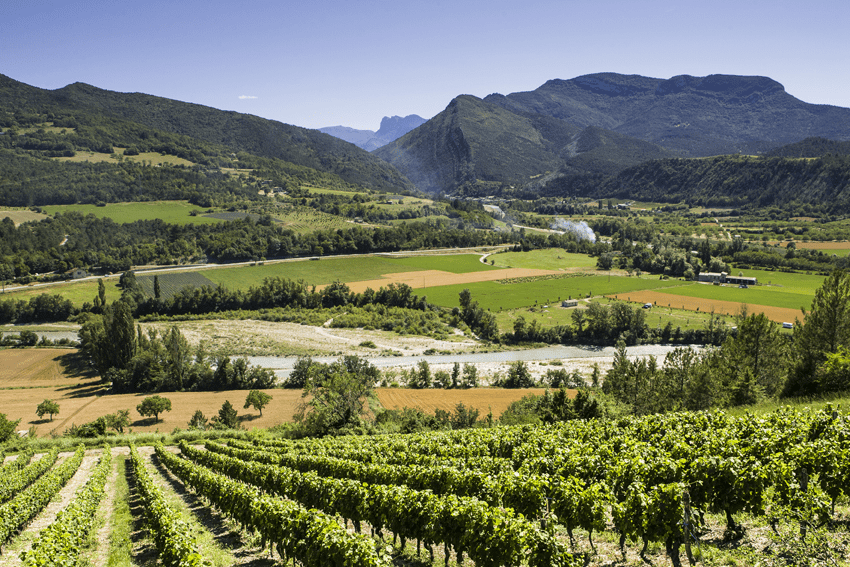
Nestled in the heart of Southeast France, Biovallée is not just a geographic location—it is a bold environmental experiment. Spanning the Drôme Valley, this “living laboratory” has become Europe’s premier reference for territorial ecological transition, proving that a rural economy can thrive while respecting the limits of the planet.
The Vision: A 100% Sustainable Valley
Launched officially in 2009, the Biovallée project unites 102 municipalities (including Crest and Die) with a single mission: to become a model territory for sustainable development. Unlike top-down government mandates, Biovallée grew from the roots up, fueled by a 50-year history of organic farming pioneers and “neo-rural” settlers who arrived in the 1970s.
Core Ecology Initiatives
The territory’s success is built on four strategic pillars that integrate social well-being with environmental protection:
- Organic Agriculture Excellence:
- The Leader in France: Over 40% of the valley’s farmers are certified organic, compared to a national average of under 10%.
- Food Sovereignty: The “Agri Court” platform connects local producers with school canteens and hospitals, aiming for 80% local/organic food in collective catering by 2025.
- Energy Autonomy & Decarbonization:
- Renewable Energy: The project targets 100% energy autonomy by 2030, leveraging solar, biomass, and small-scale hydro.
- Eco-Construction: Biovallée is a hub for “green building,” utilizing local materials like timber from the Vercors and straw insulation.
- Circular Economy & Zero Waste:
- Filière Paillettes: An innovative micro-filière that recycles local plastic waste into new products.
- Waste Reduction: Through aggressive composting and “Resourceries” (second-hand centers), the valley aims to reduce household waste by 50%.
- Preservation of “The Common”:
- The Drôme River: Once heavily polluted, the river is now swimmable across 95% of its course—a victory for local biodiversity, including the return of beavers and otters.
- Biodiversity Marathons: Ongoing initiatives in 2025-2026 focus on planting miles of hedgerows and restoring wetlands to combat climate-induced droughts.
Why Biovallée is Different
The secret to Biovallée’s longevity is cooperation. It is managed by an association that brings together local government, 1,700 businesses, and over 1,000 community groups. Every January, the town of Die hosts the “Rencontres de Die et de la Biovallée,” a major forum where citizens and experts debate the future of ecological resilience.
Advanced Autonomous Projects: The “Loop” Systems
The most exciting developments in Biovallée today are closed-loop systems that minimize external inputs.
- Integrated Aquaponics (Fish to Plants): Several experimental farms in the valley utilize high-tech aquaponics. Large tanks of Trouite (Trout) or Tilapia generate nutrient-rich wastewater. This water is pumped into outdoor hydroponic beds or utilized for “Fertigation” (fertilizing while irrigating) for high-value crops like medicinal herbs and gourmet greens. This reduces water consumption by 90% compared to traditional field farming.
- Permaculture at Scale: Projects like the Ferme de la Durette serve as models for “Micro-Ferme” profitability. They use forest gardens (agroforestry) where fruit trees provide shade and nutrients for ground-level vegetables. This “autonomous culture” creates its own micro-climate, essential for resisting the rising heat of the Drôme summers.
- Energy-Autonomous Greenhouses: Using Biovallée’s biomass expertise, new greenhouse projects use “Jean Pain” style compost heating—where the heat generated by decomposing wood chips warms the greenhouse soil during winter, allowing for year-round production without fossil fuels.
Top Villages for Investment and Development
If you are looking to develop a project, the valley is divided into different “atmospheres.” Here are the strategic hubs:
Crest: The Innovation Capital
- Vibe: Vibrant, artistic, and the “headquarters” of the Biovallée movement.
- Strategy: Best for projects that need high visibility, eco-tourism, or “Agri-Tech” partnerships.
- Cost: Higher than the rest of the valley, but strong resale value.
Die: The Deep Green Sanctuary
- Vibe: Surrounded by high cliffs, very community-oriented, and the home of the Clairette de Die.
- Strategy: Ideal for deep permaculture, medicinal plants, and retreat centers.
- Cost: Moderate.
Saillans: The Collaborative Village
- Vibe: Famous for its “participatory democracy” governance.
- Strategy: Best for “Social & Solidarity Economy” (ESS) projects or community-supported agriculture (AMAPs).
Where to Find “Affordable” Land for Farm Projects

While property prices in the primary hubs of Crest and Die have experienced a notable upward trend, the surrounding “side valleys” and the Haut-Diois region currently present the most advantageous price-to-potential ratio for investors in 2026. The Roanne Valley, particularly around Saint-Benoit-en-Diois, offers a wild and striking landscape at a significantly lower cost than the main river axis, making it an ideal location for specialized ventures like goat farming or the cultivation of aromatic plants. Similarly, the Gervanne Valley, situated at the strategic gateway to the Vercors near Beaufort-sur-Gervanne, boasts excellent soil quality and remains relatively affordable for those pursuing small-scale market gardening. For those requiring even more space, the Bourdeaux area to the south of the main Biovallée axis provides expansive rolling hills perfectly suited for livestock; here, land prices are often 20% to 30% lower than those found closer to Crest, offering a substantial entry point for larger-scale ecological projects.
Strategic Connectivity (The “Commuter-Farmer” Balance)
One of Biovallée’s greatest strengths is its proximity to major European hubs, allowing for a hybrid lifestyle.
| Destination | Distance from Crest | Travel Time (Car/Train) | Why it matters |
| Valence (TGV) | 30 km | 35 mins | Access to the high-speed rail network. |
| Lyon | 125 km | 1h 30m | Largest market for organic produce and tech talent. |
| Avignon | 135 km | 1h 35m | Gateway to the South and Mediterranean markets. |
| Geneva | 240 km | 2h 45m | Proximity to international NGO and ESG funding hubs. |
| Marseille | 220 km | 2h 15m | Access to the major shipping ports. |
🍇 The Granite Throne: Hermitage, Bio-Innovation, and the Majestic Rhône Curve
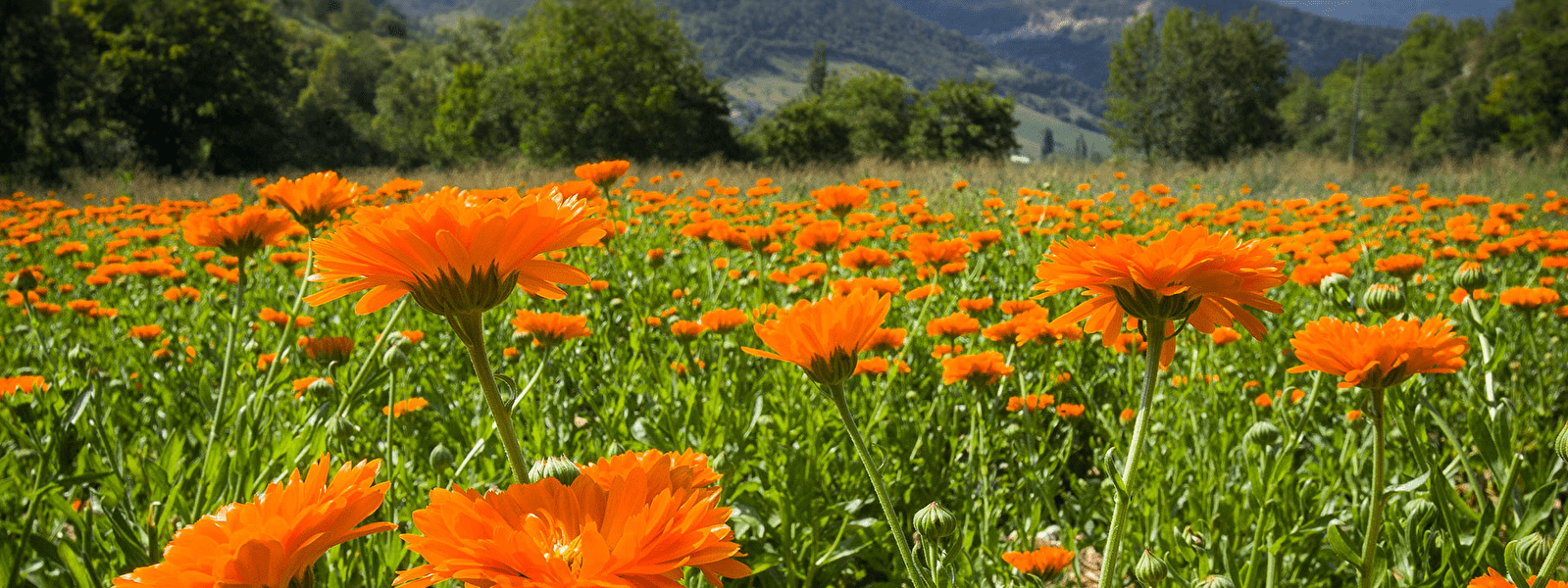
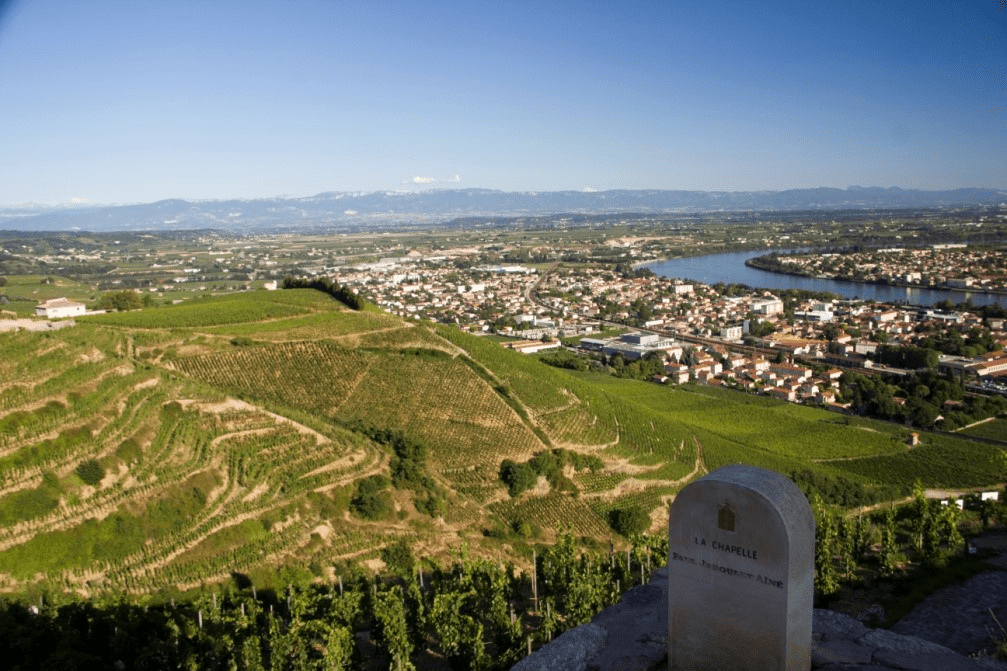
The Hermitage hill stands as a profound geological anomaly, acting as a granite sentinel that disrupts the otherwise flat expanse of the Rhône’s left bank. This massive outcrop exerts such tectonic force that it compels the river into a dramatic, sweeping curve, creating a south-facing amphitheater of heat and light. Located just 30 kilometers north of the Biovallée’s gateway at Crest, the Hermitage serves as a high-altitude neighbor and a spiritual extension of the Drôme’s ecological ambitions.
While the Biovallée focuses on autonomous polyculture and circular rural systems, the Hermitage applies those same sustainable principles to vertical viticulture. The two regions are linked by the same environmental corridor; a quick 25-minute drive or a scenic cycle along the ViaRhôna connects the intense, mineral-driven slopes of Tain-l’Hermitage to the organic heartlands of the Drôme Valley. This proximity allows for a unique synergy where the high-value “Bio” wine expertise of the Rhône flows directly into the diversified permiculture and eco-tourism projects of the Biovallée.
Would you like me to create a PHP-based “Investment Map” script for your dashboard to visualize the travel times and land prices between these two sectors?
- The “L’Hermite” Exposure: The hill faces due south, acting as a giant solar collector. This unique orientation protects the vines from the cold “Mistral” winds while bathing them in intense sunlight.
- Granite Terroir: The soil is a complex mix of granite, mica-schists, and quaternary alluvial deposits. This lean, stony ground forces vine roots to dive deep, creating the intense minerality found in the region’s legendary Syrah and Marsanne/Roussanne whites.
- Terraced Engineering: To prevent erosion, the slopes are carved into ancient stone terraces. Every vine must be tended by hand; no tractor can navigate these vertical gradients, making it a naturally “human-touch” landscape.
The “Bio” Revolution: Leading the Rhône in Ecology
Hermitage is not just old-world tradition; it is the laboratory for the Rhône’s organic and biodynamic future.
- Biodynamic Pioneers: Houses like M. Chapoutier and Domaine Jean-Louis Chave have transitioned vast swathes of the hill to biodynamic farming. They use natural preparations (like horn manure and silica) and follow lunar cycles to strengthen the vine’s immune system without synthetic chemicals.
- Low Intervention: In the cellar, “Bio” wine from Hermitage is characterized by indigenous yeast fermentation and minimal sulfur. The goal is a pure “expression of place” rather than a manipulated commercial product.
- The Return of Biodiversity: Between the vine rows, you will now see cover crops, wild clover, and even the reintroduction of beehives and bird boxes to create a balanced ecosystem that resists pests naturally.
Top “Bio” Estates to Watch in 2026
| Estate | Strategy | Sustainability Focus |
| M. Chapoutier | 100% Biodynamic | World’s largest biodynamic vineyard owner; Braille labels on every bottle. |
| Domaine Jean-Louis Chave | Regenerative Traditionalism | Ancient methods, minimal tilling, and masterful blending of diverse hill “climats.” |
| Delas Frères | Eco-Architectural | Their new winery in Tain-l’Hermitage is a masterpiece of local stone and natural thermal regulation. |
| Domaine Dard & Ribo | Natural/Bio | Cult favorites for “zero-zero” (no sulfur) wines that define the modern bio-movement. |
Investment Perspective: The “Blue Chip” of Terroir
For those looking at “affordable” land, Hermitage itself is nearly impossible to acquire—it is the “Manhattan” of wine. However, savvy investors are looking at the Crozes-Hermitage plains surrounding the hill or the Saint-Joseph slopes across the river. These areas offer:
- Lower entry costs for developing bio-wine projects.
- Climate Resilience: Higher altitude plots in Saint-Joseph are increasingly valuable as the Rhône valley warms.
- Tourism Synergy: The proximity to the ViaRhôna (the 815km cycle path from Lake Geneva to the Mediterranean) makes these estates perfect for “Eco-Oenotourism” projects.
Related Links
- Biovallée Official Website – The central hub for all territorial actions and project news.
- Destination Biovallée® – Biovallée – Vallée de la Drôme
- La Biovallée – La Drôme Tourisme
- Biovallée, une expérience pionnière de reconnexion au vivant | Groupe Caisse des Dépôts
- La Biovallée® en Pays Diois dans la Drôme – Diois Tourisme
- Installer de nouveaux agriculteurs : le projet de territoire de la Biovallée (Drôme)
- La Nef – The ethical bank (based nearby) that specializes in financing Biovallée-style projects.
- SAFER AURA – The official body for agricultural land sales.
- Agridées – Research on the profitability of autonomous farm models in France.
- Territoires d’Innovation (France 2030) – Government details on the valley’s innovative status.
- Association Ecologie au Quotidien – The organizers behind the famous ecology meetings in Die.
doxycycline monohydrate 100 mg tablet
doxycycline monohydrate 100 mg tablet
doksiciklin
doksiciklin
how can i get zithromax
how can i get zithromax
doxycycline hyclate 100 mg cap
doxycycline hyclate 100 mg cap